top of page
Filter by Topic

Acute Stress Responses

Add

Adverse Childhood Experiences (ACEs): Important Knowledge for Educators

Add

An Open Letter to Teachers From Saskatchewan Youth

Add

Best Practices and Lessons Learned from a Multi-Jurisdictional Scan

Add

Breathing to Reduce Negative Emotions

Add

Breathing to Reduce Negative Emotions for Kids

Add

Child Maltreatment (Part 1) - Reporting Rates Within Canada

Add

Child Maltreatment (Part 2): Potential Signs of Child Abuse and Neglect

Add

Child Maltreatment (Part 3) - How to Respond to Disclosures of Abuse and Neglect

Add

Child Maltreatment (Part 4) - Regulations and Contact Information to Report Child Abuse in the Praries

Add

Children who are Diffferently Abled

Add

Children's Emotional Regulation (Part 1)

Add

Children's Emotional Regulation (Part 2)

Add

Disclosures (Part 1)

Add

Disclosures (Part 2)

Add

Disordered Eating

Add

Enabling Significant Connections in the Context of COVID: Guidance for Governments

Add

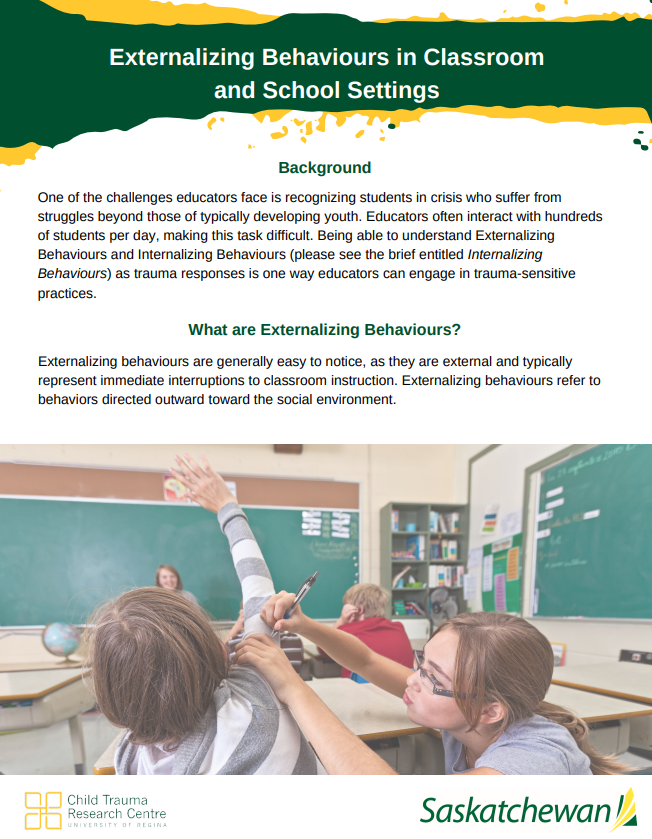
Externalizing Behaviours in Classroom and School Settings

Add

Gender-Based Violence

Add

Gender-Inclusive Language in Pregnancy Care

Add

General Strategies for Anxiety Reduction and Managment for all Ages

Add

Go Away Mr. WORRY

Add

Guidance for Service Providers: Enabling Significant Connections for Youth in Care

Add

Harm Reduction Strategies for People who use Drugs

Add

Impacts of COVID-19 on Children and Youth in Care

Add

Impacts of School Closures

Add

Inclusive Language

Add

Indirect Pandemic Risks for Children and Youth

Add

Intentional Fostering of Relationships

Add

Interim Care Protocols During COVID-19

Add

Internalizing Behaviours in Classroom and School Settings

Add

Managing Stress and Anxious Feelings in Children for Teachers

Add

Managing Your Mental Health During Exam Season

Add

Mental Health of Service Providers: Experiences and Coping Strategies

Add

Mental Health: What Adults and Caregivers are Experiencing and What They Can Do

Add

Mental Health: What Youth Are Experiencing and What They Can Do (COVID-19)

Add

Moratorium on Youth Transitioning Out of Care

Add

Navigating Social Media

Add

Occupational Stressors (Part 1)

Add

Occupational Stressors (Part 2)

Add

Online Child Sexual Explotation

Add

Pan-Canadian Knowledge Synthesis on Trauma-Informed/Sensitive Practices in Education

Add

Prairie Overdose Crisis and COVID-19: A Pandemic Within a Pandemic

Add

Pregnancy During COVID-19: Risks and Health Guidelines

Add

Protecting Children During the Pandemic

Add

Providing Psychological First Aid (PFA) Part 1 - Supporting Children and Youth

Add

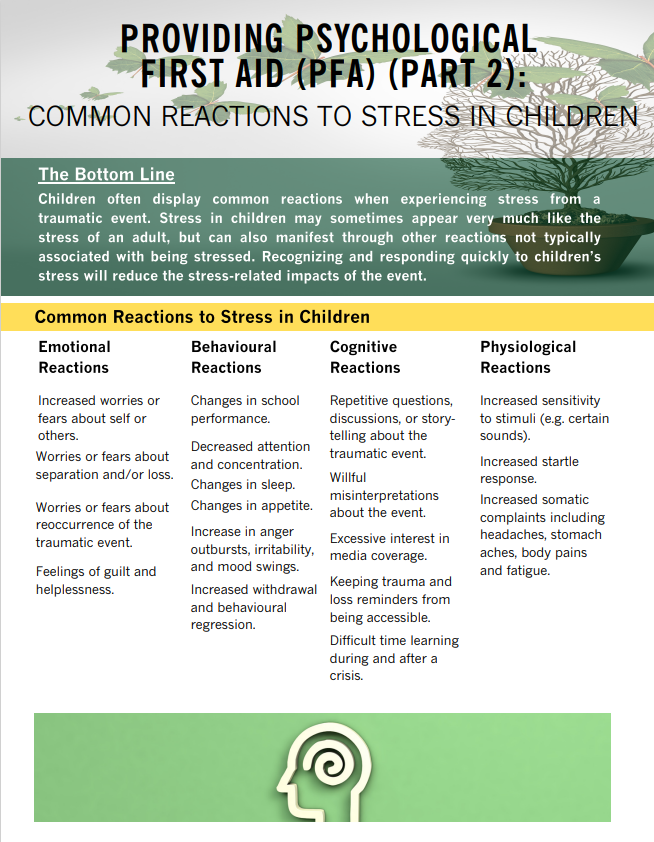
Providing Psychological First Aid (PFA) Part 2 - Common Reactions to Stress in Children

Add

Reducing Back-to-School Anxiety for Children

Add

Responding to Ongoing Effects of COVID-19

Add

Risks Facing Youth Transitioning Out of Care During COVID-19

Add

Saskatchewan Back-to-School Guidelines

Add

Self-Care Checklist for Youth, by Youth

Add

Self-Regulation

Add

Sex and Gender Diversity and Substance Use

Add

Shaping Positive and Trauma-Sensitive Interactions

Add

Shaping Trauma-Sensitive Classrooms

Add

Substance Use in Canada During COVID-19

Add

Switching to Tele-Health Communications for Social Workers

Add

Talking to Children & Youth About Traumatic Events

Add

Talking to Children About COVID-19: Concrete Suggestions for Dialogue

Add

Talking to Children About Loss and Grief

Add

The Trauma Sensitive Classroom

Add

Trauma-Layering: Practicing Trauma-Informed Care with Children and Youth

Add

Trauma-Sensitive Classroom Activities Across the Grades

Add

Trauma-Sensitive Classroom Activities for Secondary School Students

Add

Trauma-Sensitive Schools Children in Care

Add

Understanding Adverse Childhood Experiences (ACEs)

Add

Understanding Children's Grief

Add

Understanding What the Words Mean: Trauma, Trauma-Informed, & Trauma-Sensitive

Add

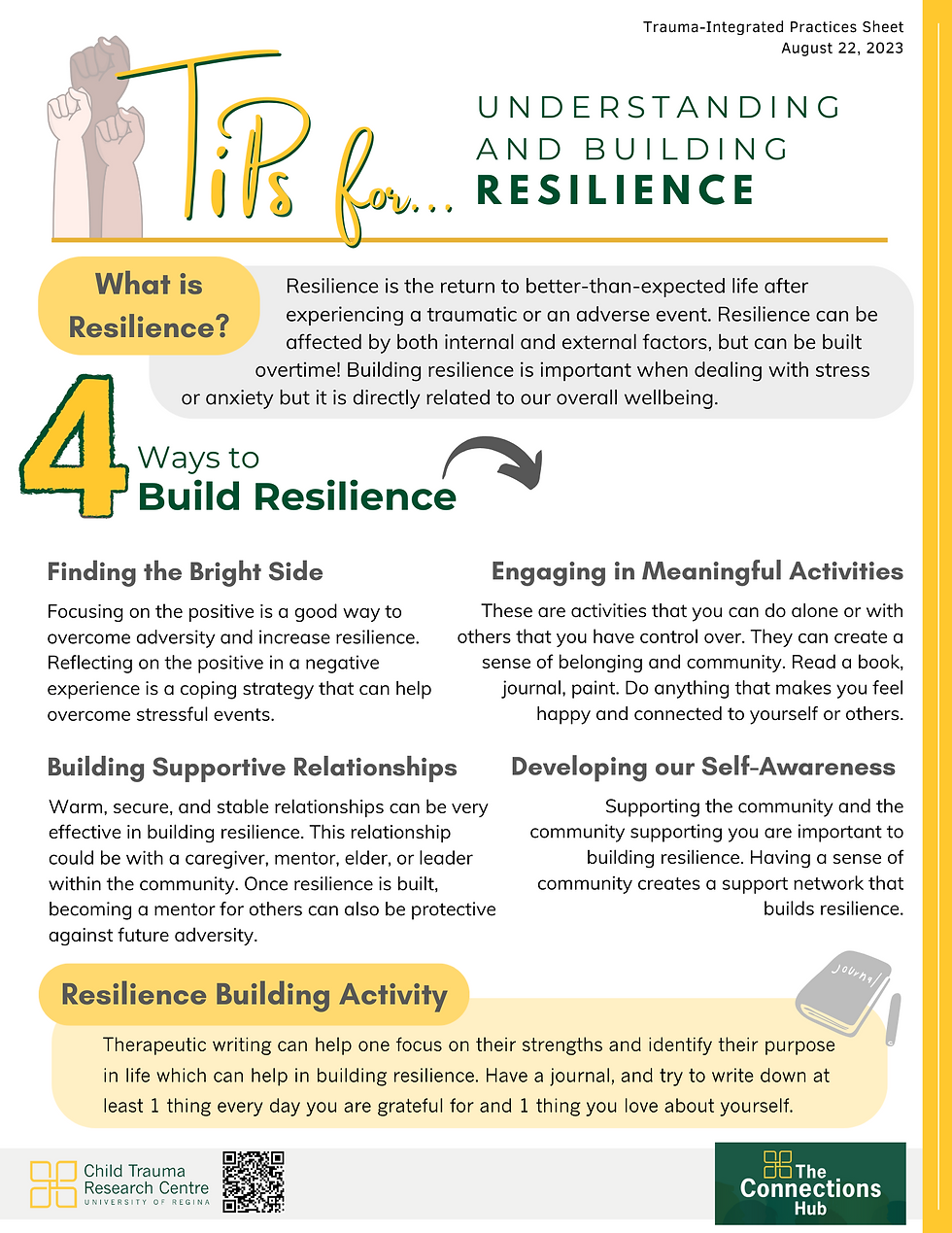
Understanding and Building Resilience

Add

Understanding and Managing Eco-Trauma

Add

Violence Against Women (VAW) Shelters: Concerns and Adaptations During COVID-19

Add

Virtual Communications in Child Welfare

Add

Youth and Substance Use

Add

At the Child Trauma Research Centre, we create a variety of research-based resources for caregivers, practitioners, youth, and many others. We currently create 3 types of resources for these groups:  TIPs (Trauma Integrated Practices) for... is a series of knowledge products that takes current research and adapts it into easy-to-read posters for practitioners and caregivers, including what can be done to help around the selected topics. These posters are in short form and are suitable for all individuals.    Knowledge Briefs are in-depth syntheses of current academic research on a particular topic. These knowledge briefs are typically longer, with more information, and may be more suitable for individuals with some knowledge on the topic.  Trauma-Sensitive Practices for Educators is a series of briefs specifically designed for educators to help understand trauma in the classroom and how it may affect behaviour and learning outcomes, as well as how to create a trauma-informed and supportive classroom.

bottom of page